
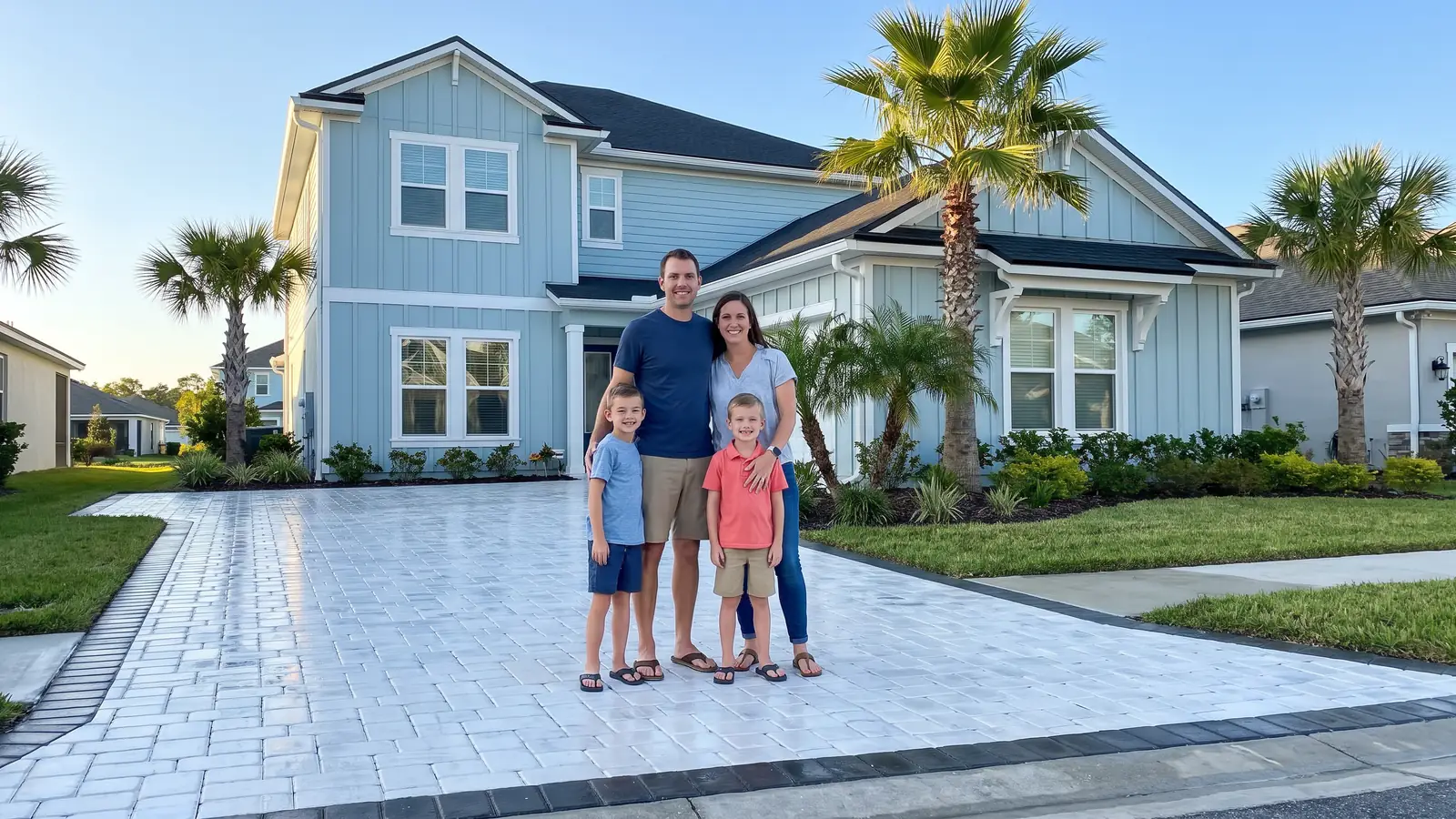
Deeper color and joints that stay full
Paver Sealing in Nocatee, FL
Get a free paver sealing estimate for your Nocatee driveway, lanai or pool deck by calling (904) 747-6756.
- Brings out deeper paver color
- Fresh joint sand helps lock pavers in place
- Gives weeds less room to grow
- Makes the surface easier to keep clean
- Free estimate, no obligation
Request a Free Estimate
Free, no obligation.
Who can seal the pavers at my Nocatee home?
Paver sealing in Nocatee, FL is done by a local contractor who gets back to you within 1 business day, usually much sooner. The estimate is free, and the decision to book is yours. To begin, call (904) 747-6756.
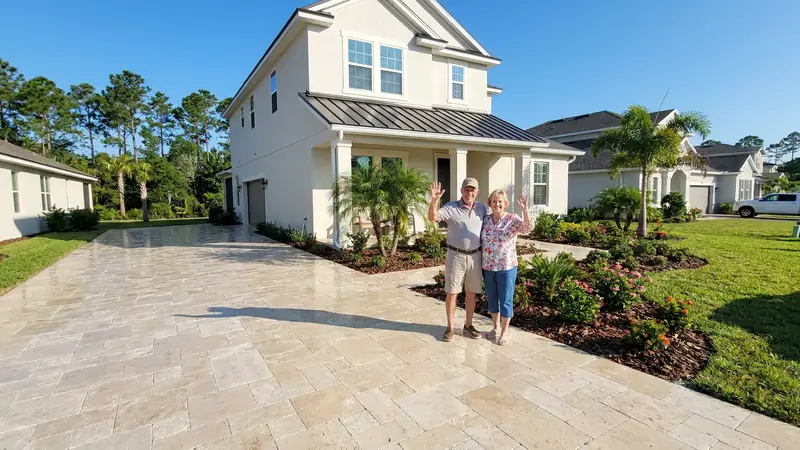
A fresh coat deepens paver color, holds the joint sand in place and makes pollen, mildew and tire marks easier to rinse off. Think of a driveway that left the builder bright and even and now looks gray at the edges, with sand scattered across the apron after every storm. After a clean, re-sand and seal, it reads dark and uniform again with every joint full. Driveways and pool decks wear in different ways, so point out how you use each one when you request your free estimate.
Paver Sealing Nocatee Is Proud to Serve Northeast Florida
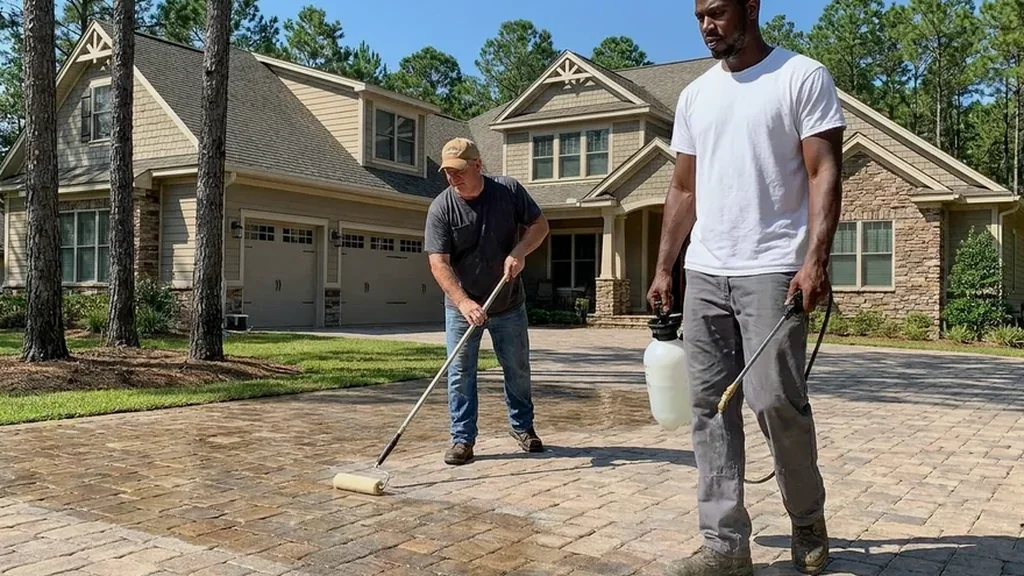
What comes with a paver sealing job in Nocatee?
Expect four parts: an inspection, a deep clean, new joint sand and the sealer itself. The cleaning usually takes the longest. To go over each part for your home, call (904) 747-6756.
Inspection
Square footage, old coating, sunken spots, loose pavers and places where water sits all get noted before a price is set.
Deep clean
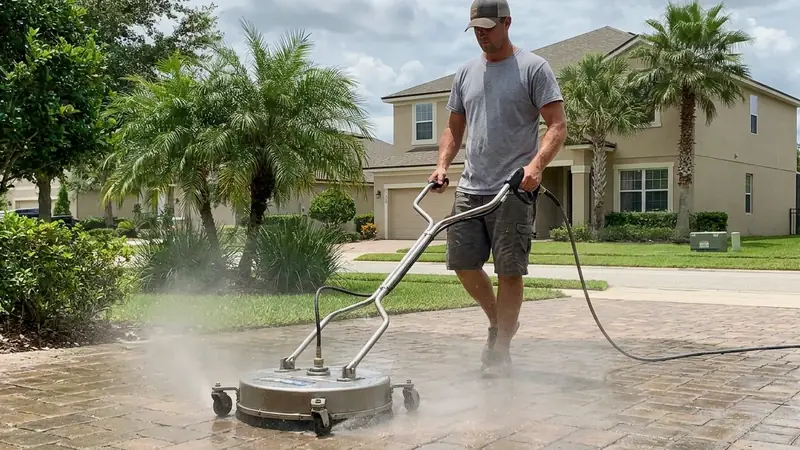
Rust, mildew, pollen and dirt come off with cleaners made for concrete pavers and a rotary surface cleaner.
Joint sand
Kiln dried sand goes into every joint, so the pavers lock together and weeds find less room.
Sealer coat
Sealer goes on fully dry pavers in an even pass at the rate printed on the label.
How do I know my Nocatee pavers are due for sealing?
Watch for color that has turned chalky, joints sitting lower than the paver edges, sand on the driveway after rain and water that soaks in instead of beading. A Jacksonville resealing company also points to white, cloudy or peeling sealer as a sign the old coat has failed. Refilling joints early costs less than resetting pavers that have shifted. For a quick opinion, call (904) 747-6756.
Which paver sealer holds up in the Nocatee heat?
No single product suits every home, so ask what the contractor plans to use and why. A Jacksonville resealing company that serves Nocatee says it checks the existing coating first and will not coat over sealer that has gone white or started peeling, over trapped moisture or over a product it cannot identify. Matching the new sealer to whatever is already there heads off most failures. To compare options, call (904) 747-6756.
Sealers also differ in how they look. Unilock describes a wet look that deepens color and may add gloss, and a natural look that stays close to unsealed pavers. It also notes that solvent-based sealers evaporate faster, so they go on better in cooler conditions. Ask which type goes on each area when you request your free estimate.
Wet look or natural finish for a Nocatee home?
Pick a wet look for darker, richer color with some shine, or a natural finish to keep the pavers close to how they looked new. Around a screened pool, footing matters more than shine, and Unilock says a penetrating matte finish keeps more traction than a high gloss. In a village with design rules, ask your association whether a glossy driveway needs approval. To see both finishes side by side, request your free estimate.
How often should Nocatee pavers be resealed?
Plan on about three to four years for most Florida surfaces, the span a Jacksonville resealing company plans around, and Unilock says plenty of owners recoat every three to five years. Full sun, pool chemicals, heavy irrigation and harsh cleaning all shorten that span. A yearly look is worth it, but a yearly coat is not. To have your current coat checked, call (904) 747-6756.
Will sealer hide stains already on my Nocatee pavers?
No, and it can make them worse. Sealer bonds to whatever sits on the surface, and Unilock warns that it can make existing stains easier to see. Orange marks from reclaimed irrigation, oil spots and leaf stains each need their own treatment before any coat goes down. If a quote skips the stain work, ask why before you request your free estimate.
When is a good time to seal pavers in Nocatee?
Dry weather matters more than the month. Unilock asks for clear skies for about 24 to 48 hours, temperatures between 50 and 90 degrees with 75 as ideal, and a dry spell of as long as 48 hours afterward with the sprinklers off. Pavers that are too hot can stain or peel early. To pick a date that fits the forecast, call (904) 747-6756.
Newer pavers add one more wait. Unilock says efflorescence, the white haze that rises out of new pavers, can take two to three months or up to a year to clear, and sealing over it traps the haze. Nocatee grew nearly fivefold between 2010 and 2020, so plenty of pavers there are still fairly young. Ask the contractor to check for that haze when you request your free estimate.
Can sealing fix sunken or loose pavers in Nocatee?
No. Sealer cannot lift a low paver or close a gap. Pavers that rock under a car or hold a puddle after rain need the base repaired first, and joint sand only stays put once they sit level. A Jacksonville resealing company that serves Nocatee lists sinking pavers and drainage problems as work to sort out before sealing. Find out if leveling is included or priced separately when you request your free estimate.
Which areas of a Nocatee home can be sealed?
Driveways, screened pool decks, patios and front walks can all take a coat. Each one wears differently, so the plan changes from one area to the next. To start with the spot that bothers you most, request your free estimate.
Driveways
Tires, oil spots and full sun hit the driveway hardest, and the apron by the street loses sand first. Sealing the driveway changes how the whole house looks from the curb.
Screened pool decks and lanais
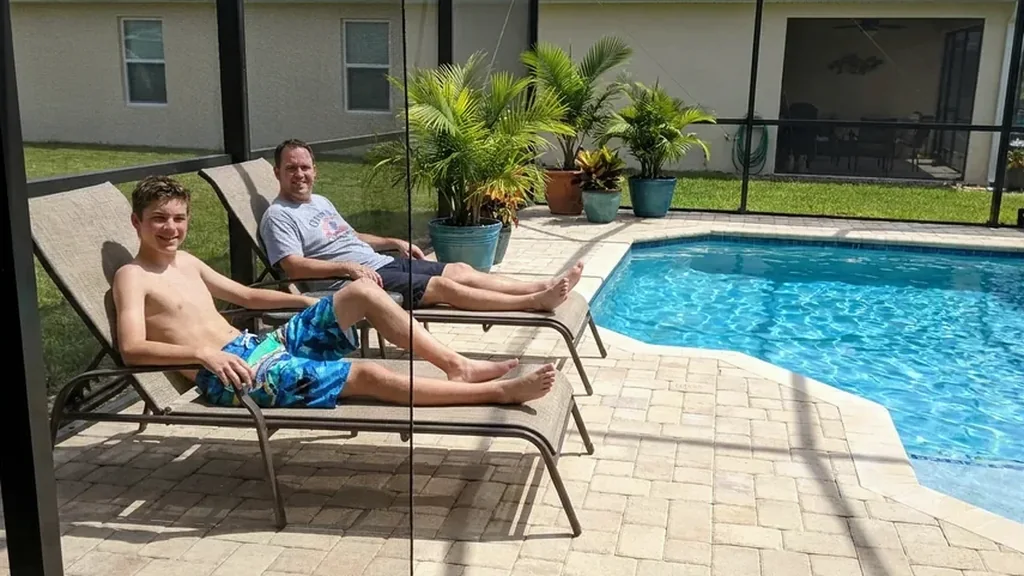
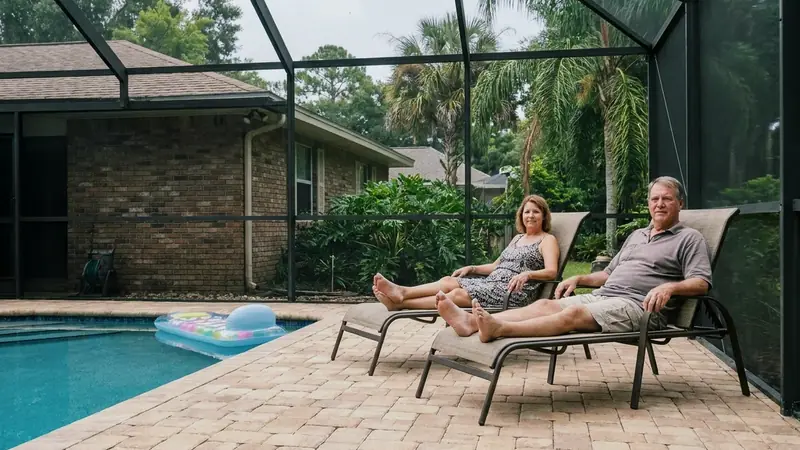
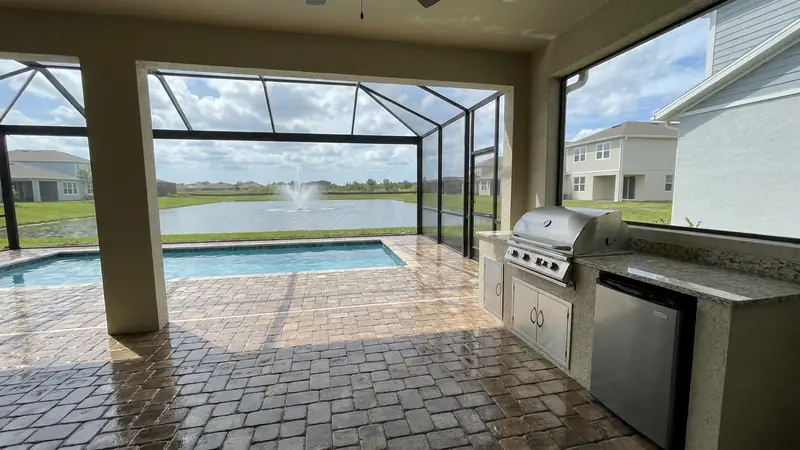
Chlorine splash, wet feet and patio chairs wear on these pavers every day. Sealing around a pool should leave the surface safe to walk on when it is wet.
Back patios by a pond or preserve
Patios facing a pond or preserve land stay damp longer and gather leaves and mildew. They usually need the most scrubbing before anything else happens.
Walkways and front entries
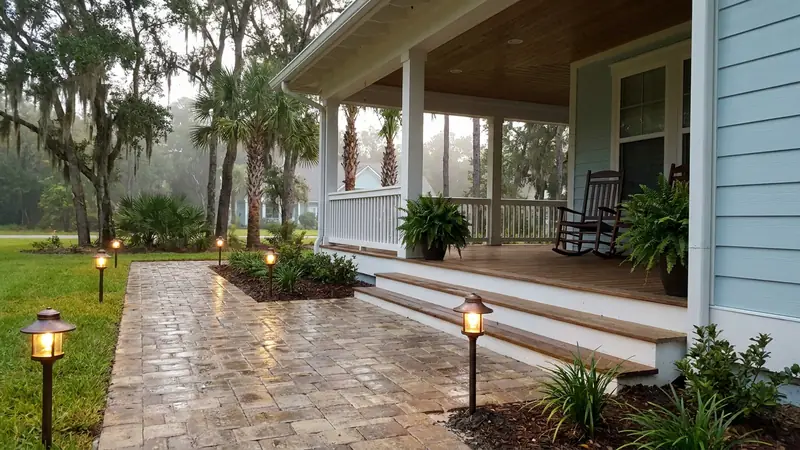
Front walks collect mulch, potting soil and drips from planters. Sealing the entry walk is quick work that guests see first.
What wears down pavers in Nocatee?
Five problems show up again and again: orange irrigation stains, builder sand washing out, storm runoff, mildew in damp corners and sun fading. Each one is cheaper to handle early. To learn which ones your pavers have, call (904) 747-6756.
1. Orange irrigation stains
The Crosswater design manual makes reuse water from JEA the only irrigation source in its villages, and a First Coast washing company links orange marks on concrete to well or reclaimed water. Those marks need a rust treatment before any sealer.
2. Builder sand washing out
The same company says builder joint sand tends to fail within two or three summers. Nocatee grew from 4,524 people in 2010 to 22,503 in 2020, so many driveways still hold their first fill of sand.
3. Storms on pool decks
Summer storms pull sand from pool decks and driveway aprons, that company notes. Once the joints run low, pavers can shift and weeds move in.
4. Mildew in damp corners
Pavers by a pond, a preserve edge or a sprinkler zone stay wet longer. A Nocatee pressure washing company says HOAs and neighbors notice visible mold or algae quickly.
5. Sun on open driveways
A driveway with no shade bakes from morning to evening, and unsealed color turns chalky there first. A Jacksonville resealing company lists full sun among the things that shorten a coat's life.
What should paver sealing in Nocatee cost?
Expect about $1.75 to $3.25 per square foot in Nocatee for a complete clean, sand and seal, the range a washing company publishes on its Nocatee page. A Jacksonville resealing company lists resealing from $1.50 per square foot when the existing coat is sound. The final number depends on the old coating, the surface condition, the joint sand, any repairs and whether stripping is needed. For a written number, request your free estimate.
If a bid comes in far under that range, ask which steps it leaves out. Stain treatment, drying time and fresh joint sand all take real labor, and skipping them is how a coat fails early. To check a quote you already have, call (904) 747-6756.
Need only a wash? The cleaning and joint sand guide covers it, the town list shows where contractors work, and the Nocatee paver sealing page has the overview.
| Paved area | Typical example | Clean, sand and seal |
|---|---|---|
| 300 sq ft | Small patio or walkway | $525 to $975 |
| 600 sq ft | Two car driveway | $1,050 to $1,950 |
| 1,000 sq ft | Large driveway or pool deck | $1,750 to $3,250 |
| 1,500 sq ft | Driveway plus pool deck | $2,625 to $4,875 |
Math based on the $1.75 to $3.25 per square foot that Northeast Florida paver companies published as of November 2026. Your contractor sets the actual price after seeing the surface. Repairs, leveling and stripping failed sealer are usually extra.
Why hire a contractor who already works in Nocatee?
A contractor who works these villages already plans for reclaimed water stains, builder sand and summer storms, and knows that many associations want to see changes first. The price still comes in writing, and you decide when you are ready. To begin, call (904) 747-6756.
Contractors who already work in Nocatee
A company that serves the villages has seen what reclaimed irrigation, builder sand and summer storms do to local pavers. That makes the first visit more useful.
A free price to start with
The visit and the estimate are free. If the number does not suit your budget, you are free to say no.
Published rates to compare
First Coast paver companies post what they charge per square foot, and those ranges are on this site. A quote far outside them deserves a question.
Time to check with your HOA
Get the price and the finish in writing, then share it with your association if it wants a look. The contractor standards page spells out what to check before signing anything.
Want a free quote to seal your Nocatee pavers?
Send the form or pick up the phone, and you will hear back within 1 business day, usually much sooner.
Free, no obligation
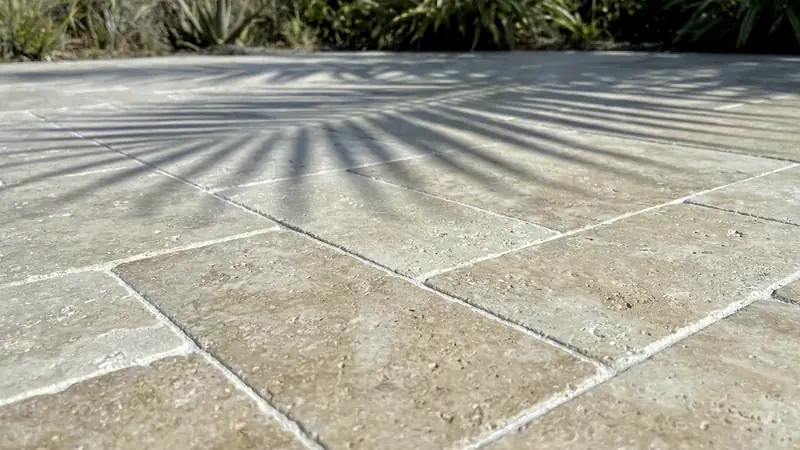
How do Nocatee pavers look after sealing?
What is the paver sealing process in Nocatee, step by step?
Most jobs run through the same five steps, from the first measurement to the final walk. When you are ready to schedule, call (904) 747-6756.
1. Walk and measure
The contractor measures the area for the sealing quote, checks how the pavers soak up water and notes any old coating, low spots or loose pavers.
2. Cover and wash
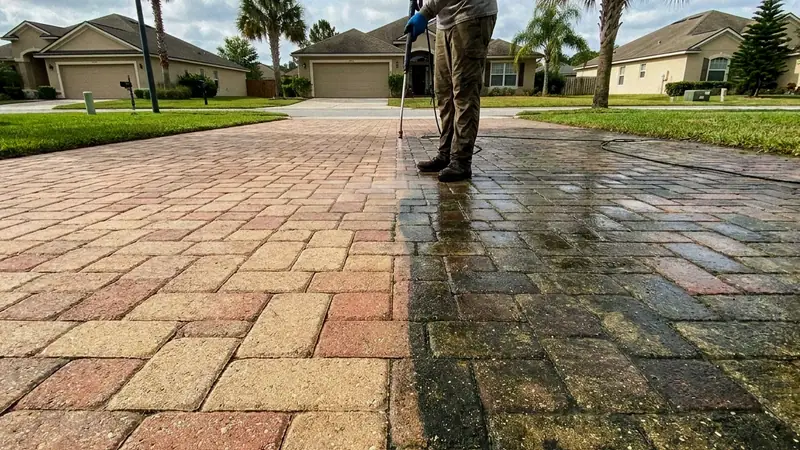
Plants, screens and the garage door get covered, and the irrigation goes off. A rotary surface cleaner washes the pavers evenly, without the stripes a bare wand can leave.
3. Treat each stain
Rust from reclaimed water, mildew and leaf marks each get a matching cleaner, tried on a small patch first.
4. Re-sand the joints
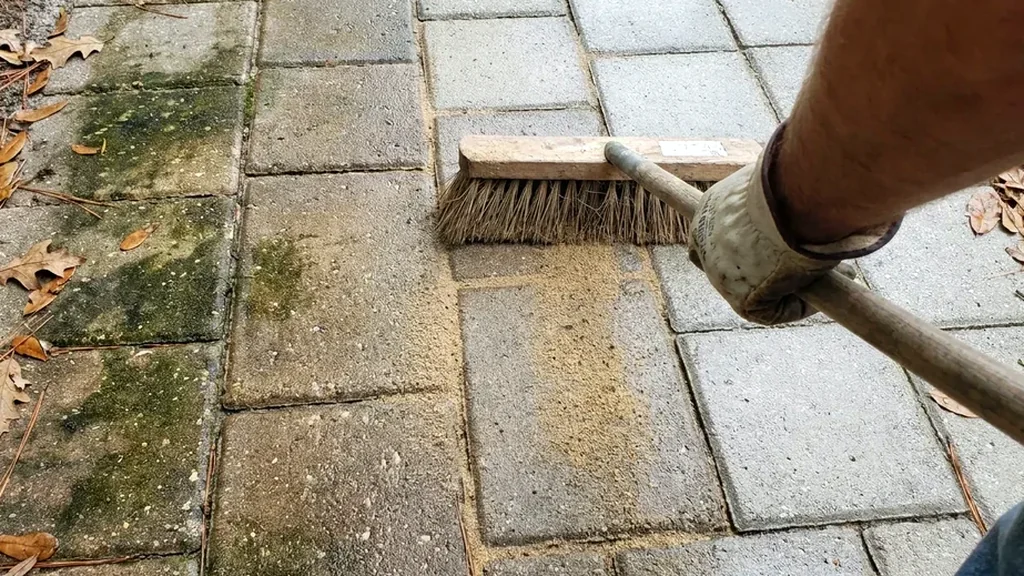
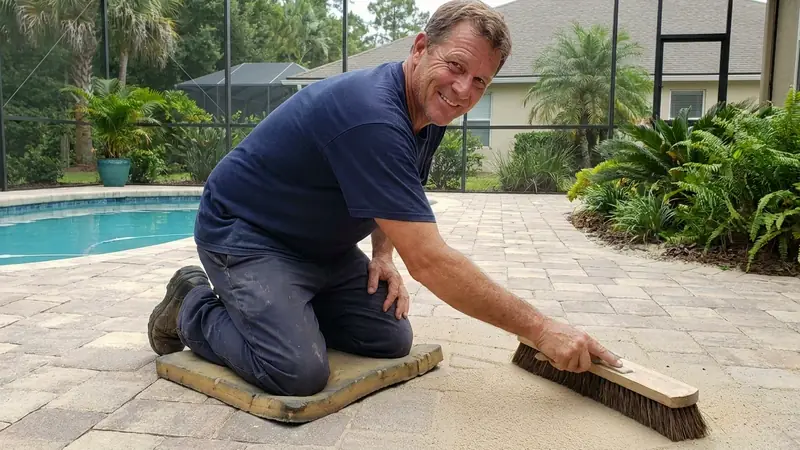
After the pavers dry, kiln dried joint sand is swept into every gap and settled, and the extra is blown clear.
5. Seal and walk through
When sealer is part of the job, a pump sprayer lays it down and a roller evens out puddles. The contractor then walks the area with you and explains how long to keep cars off.
Frequently Asked Questions
Why is paver sealing so expensive?
Most of the money pays for labor and prep, not the sealer in the can. The pavers have to be washed, treated for stains, re-sanded and left to dry before the coat goes on, and a First Coast washing company says that becomes a two-day job when the joints are empty. Stripping a failed coat adds more, since that work comes first.
How long does sealer last on pavers in Florida?
Plan on roughly three to five years. Unilock, a paver maker, says many owners reapply in that window, and a Jacksonville resealing company that serves Nocatee plans around three to four years for Florida surfaces. Full sun, pool chemicals and heavy irrigation pull it toward the short end.
Is there a downside to sealing pavers?
A few. The coat has to be renewed every few years, a high gloss can turn slippery when wet, and moisture trapped under the sealer can leave a whitish film, according to Unilock. Sealing also will not fix poor drainage or a sinking base. Dry weather and a finish matched to each area avoid most of these problems.
Is it better to spray or roll paver sealer?
Usually both. Unilock recommends soaking the pavers with a sprayer, then running a dry roller over them to pick up extra sealer and stop streaks. It also says to finish in one session, since stopping partway can leave the gloss uneven.
How much is paver sealing in Florida?
Around Northeast Florida, published prices for a clean, sand and seal run about $1.75 to $3.25 per square foot. A 1,000 square foot Nocatee pool deck would land near $1,750 to $3,250 at that rate. Resealing a coat that is still in good shape can start lower, from $1.50 per square foot at one Jacksonville company.
What do professionals use to seal pavers?
Most bring a cleaner matched to each stain, a rotary surface cleaner, kiln dried joint sand and a contractor-grade sealer laid down with a pump sprayer and roller. One Jacksonville resealing company lists kiln dried joint sand that meets ASTM C144, in six Trident colors. Ask which sealer brand and finish the contractor plans to use.
Should new pavers at a Nocatee home be sealed right away?
Not right away. Unilock suggests waiting until efflorescence, a white salt haze, has cleared, which can take two to three months or up to a year. Sealing over it traps the haze under the coat.
How soon can I park on my Nocatee driveway after sealing?
Plan on 48 to 72 hours for cars, the range a Jacksonville resealing company gives, depending on the sealer, heat, humidity and shade. Unilock also says to keep the surface dry, with the sprinklers off, for as long as 48 hours while the coat cures. Walking on it is often fine sooner.
Will sealing cover up the orange irrigation stains on Nocatee pavers?
No. Sealer locks in whatever is on the surface, and Unilock warns that it can make existing stains stand out more. Orange marks from reclaimed irrigation water need a rust treatment first, which a First Coast washing company says works where more pressure does not.